
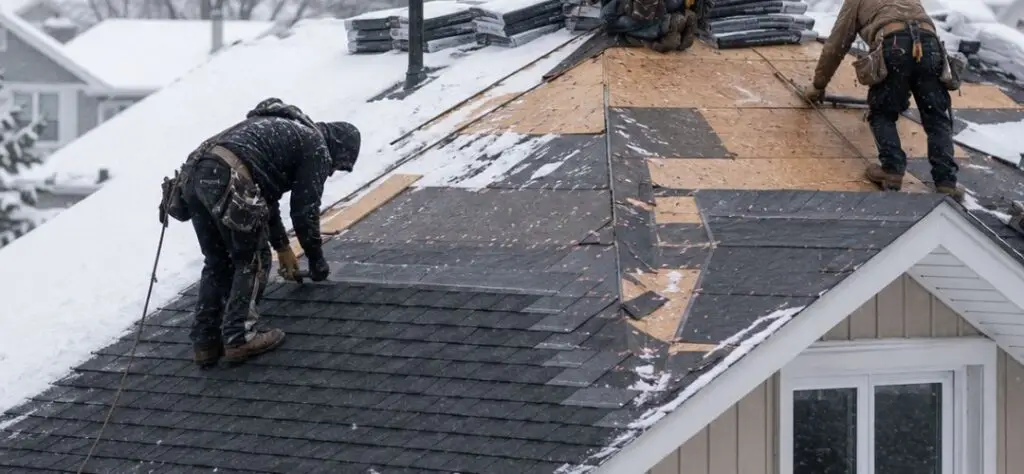
If your roof is leaking or has reached the end of its lifespan, you may be wondering whether you have to wait until spring to replace it. The good news is that roof replacements can often be completed safely during the winter, provided weather conditions are suitable and the work is performed by experienced roofing professionals.
Can a Roof Be Replaced in Winter?
Yes. Modern roofing materials and installation methods make winter roof replacement possible throughout Ontario.
Roofing contractors regularly replace roofs during the colder months, especially when temperatures remain within manufacturer-recommended installation guidelines. Although extremely cold temperatures, heavy snowfall, or freezing rain may delay work temporarily, many winter days provide safe working conditions.
Advantages of Replacing a Roof in Winter
Prevent Further Damage
If your roof is already leaking or has sustained storm damage, replacing it during the winter can prevent water from entering your home. Waiting until spring may allow small issues to become larger and more expensive repairs.
Protect Your Home Before Spring
A new roof installed during the winter helps ensure your home is ready for melting snow and heavy spring rainfall. Replacing your roof early can reduce the risk of leaks during one of the wettest times of the year.
Faster Scheduling
Spring and summer are typically the busiest seasons for roofing contractors. During the winter, you may have greater scheduling flexibility and be able to complete your project sooner.
Peace of Mind
A damaged roof can be stressful during Ontario’s harsh winters. Replacing it before severe weather arrives gives homeowners confidence that their roof is ready to handle snow, ice, wind, and freezing temperatures.
Weather Delays
Snowfall, freezing rain, high winds, or extremely cold temperatures can temporarily delay roofing work. Experienced contractors closely monitor weather conditions and schedule work when it is safe to proceed.
Cold Weather Installation
Asphalt shingles become less flexible in colder temperatures and require extra care during installation. Professional roofers use manufacturer-recommended installation practices to ensure the roof performs as intended.
Shorter Daylight Hours
With fewer daylight hours during the winter, larger roofing projects may take slightly longer to complete if work needs to be spread over multiple days.
Safety Considerations
Snow, ice, and frost create additional safety hazards for roofing crews. Professional contractors use specialized safety equipment and follow strict procedures to complete the project safely.
Should You Wait Until Spring to Replace Your Roof?
Many homeowners assume they need to wait until spring to replace their roof, but that isn’t always the best approach. While warmer weather is generally ideal for roofing projects, delaying a replacement can sometimes do more harm than good, especially if your roof is already leaking or showing signs of significant wear.
If your roof has missing shingles, recurring leaks, storm damage, or has simply reached the end of its expected lifespan, waiting several months could allow the problem to become much worse. Water can make its way into your attic, insulation, ceilings, and walls, leading to repairs that are far more expensive than replacing the roof itself.
That said, not every roof needs to be replaced immediately. If the damage is minor and the roof is otherwise in good condition, a professional roofer may recommend temporary repairs to get you through the winter before scheduling a replacement in the spring. The decision should be based on the condition of your roof rather than the season on the calendar.
It’s also worth remembering that experienced roofing contractors replace roofs throughout the winter whenever weather conditions allow. While heavy snow, freezing rain, or extreme cold may delay work for a day or two, many winter days provide safe conditions for a successful roof replacement. Modern roofing materials and proper installation techniques make it possible to complete many projects even during the colder months.
When Does Winter Roof Replacement Make Sense?
Replacing your roof during the winter isn’t the right choice for every home, but there are many situations where it makes sense, and can even prevent more costly damage. If your roof is no longer protecting your home, waiting until warmer weather could allow existing problems to become much worse.
Winter roof replacement may be the best option if:
A professional inspection recommends replacement. If an experienced roofer determines that your roof can no longer be repaired safely or economically, replacing it sooner is often the better long-term investment.
Your roof is actively leaking. Even a small leak can allow water to enter your home, damaging insulation, drywall, ceilings, and wood framing over time.
Storm damage has compromised your roof. High winds, heavy snowfall, or fallen tree branches can leave your roof vulnerable to further damage if repairs or replacement are delayed. Seek emergency roof repairs.
Your roof has reached the end of its lifespan. Older roofs that are already showing widespread wear are less likely to withstand another Ontario winter without developing additional problems.
Repairs are becoming more frequent. If you’re constantly fixing leaks or replacing shingles, investing in a new roof may be more cost-effective than continuing to pay for temporary repairs.
Large sections of shingles are missing or damaged. Exposed underlayment or roof decking leaves your home vulnerable to moisture, snow, and ice infiltration.
Frequently Asked Questions
Yes. Asphalt shingles can be installed during winter when weather conditions are suitable and manufacturer installation guidelines are followed.
Not necessarily. Costs are generally influenced more by the size, complexity, and condition of the roof than by the season.
Most residential roof replacements can still be completed within one to three days, although severe weather may cause temporary delays.
No. A properly installed roof is designed to withstand normal winter snow loads and protect your home from the elements.